
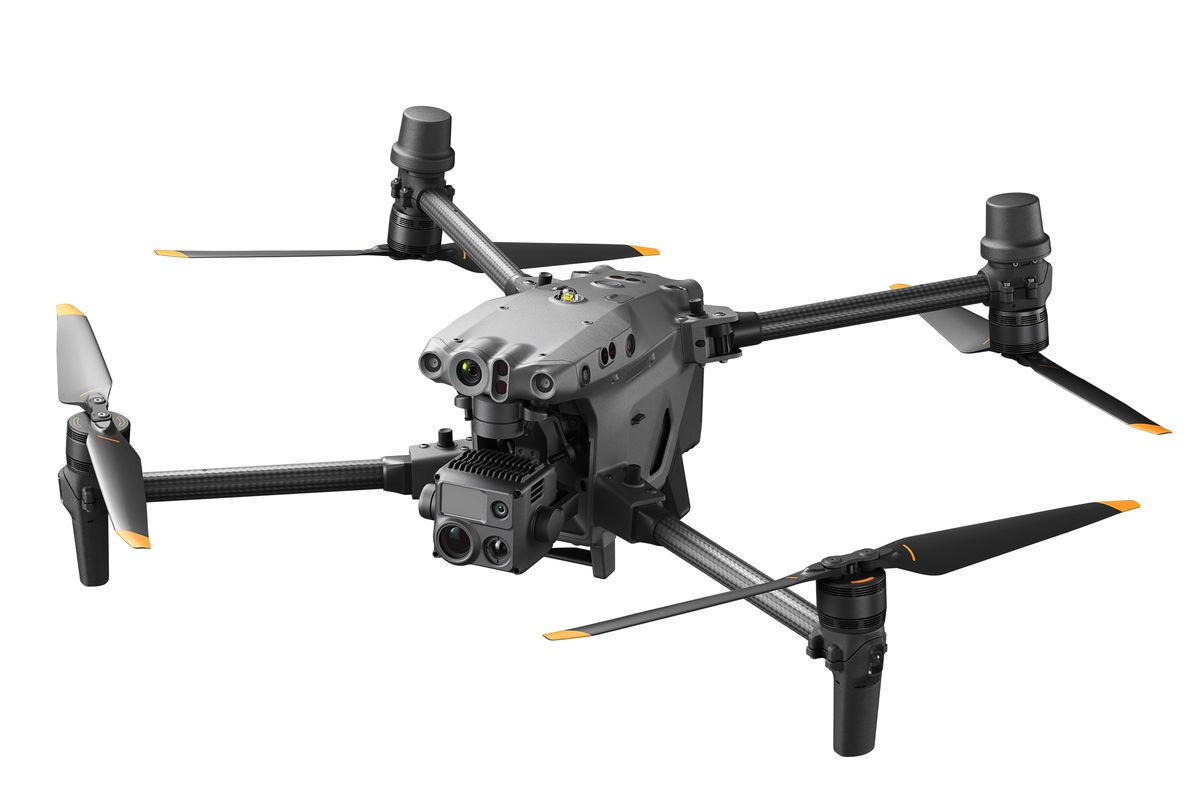
DJI’s new jewel!!
Matrice 30 series, portable, cheaper and more accessible than the Matrice 300 but with fixed sensors. What do you think? https://www.dji.com/es/matrice-30
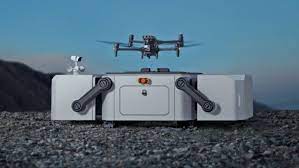
Source: Al-top Topografia
Starting advanced mission (Transversal Project)
As part of the training in our Transversal Project subject, this quarter we have started to work with several projects. Our team has chosen the project:
Navigation without Satellite Positioning and the project 3D mapping and real-time object detection.
You can find all the information on the development of these works in the tab menu, Advanced Mission.
Catalonia Smart drones
Catalonia Smart Drones, an initiative to promote the drone sector in Catalonia.
https://smartcatalonia.gencat.cat/ca/detalls/article/Catalonia-Smart-Drones

Iphone 13 pro max LIDAR test.
Recording with a Iphone LIDAR camera of our dining room, latest model of Iphone 13 pro Max.
https://www.youtube.com/watch?v=XuKyRwCqjAM
©Francesc Sancho Capdevila, 31/12/2021.Barcelona
DRONE REGULATIONS
Within the master that we are following at UPC we have a subject that tells us about the current regulation of the drones in Spain and in Europe. I am attaching a small summary in which we can see the different categories of drones, their classification and their characteristics.Much of the information shown comes from the Regulation course taught in our master.
Regulation of UAVs
I am not going to extend myself and I will only mention the main international organizations and I will focus into regulations at the Spanish and European level regarding regulatory authorities, who does it.I will also comment very simply on the distribution of airspace and classification of drones. The intention is to locate where most drones are flying and what characteristics they have.
International organizations.
ICAO, International Civil Aviation Organization.
Drones: Manual on Remotely Piloted Aircraft Systems (RPAS)
JARUS
The Joint Authorities for Rulemaking on Unmanned Systems is a group (voluntary and informal) of experts gathering regulatory expertise from all around the world, 55 countries, as well as the European Aviation Safety Agency (EASA) and EUROCONTROL.
SESAR The Single European Sky ATM Research.
SESAR is the mechanism which coordinates all EU research and development and (R&D) activities in ATM, pooling together a wealth expert to develop the new generation of ATM. Today, SESAR unites around 3000 experts in Europe and beyond. It published the strategy “U-space” in 2017.
U-space is a set of new services and specific procedures designed to support safe, efficient, and secure access to airspace for large numbers of drones, it provides an enabling framework to support routine drone operations, as well as a clear and effective interface to manned aviation.
Regulation of drones in Spain
AESA Agencia española de seguridad aérea. The competent authority responsible for regulating the drone operations in Spain is AESA.
It depends on the Ministry of Transports, Mobility and Urban Agenda. This Ministry, through AESA controls that drone regulations are applied, complied with and enforced, and assisting stakeholders it is responsible for ensuring civil aviation safety on Spanish territory
AESA main functions:
Supervision, inspection and planning of air transportation, air navigation and airport security, assess the safety risks of air transportation by threat detection. It has sanctioning powers against breaches of the laws and regulations of the civil aviation legislation.
AESA competences:
Main regulations in Spain. Royal Decree and BOE
AESA-Agencia Estatal de Seguridad Aérea – Ministerio de Fomento (seguridadaerea.gob.es)PP
2014 Artículo 51 del RD 18/2014. approving urgent measures for growth, competitiveness and efficiency.
https://www.boe.es/eli/es/l/2014/10/15/18/con
Royal Decree 1036/2017 BOE-A-2017-15721
https://www.boe.es/eli/es/rd/2017/12/15/1036
BOE-A-2018-1540
https://www.boe.es/eli/es/rd/2018/09/21/11806
Royal Decree BOE-A-2020-2087 12th February 2020
https://www.boe.es/eli/es/res/2020/01/08/(2)
Complete the provisions of legal framework of R945 / R947 and provide a legal framework for those Drone operations not foreseen in the EU Reg (Public, police, customs, SAR, firefighting, surveillance, border patrol, or similar performed by a public authority – non EASA flights).
Regulate in those aspects not provided in the first Royal Decree and adapt other aspects not provided in the EU Reg.
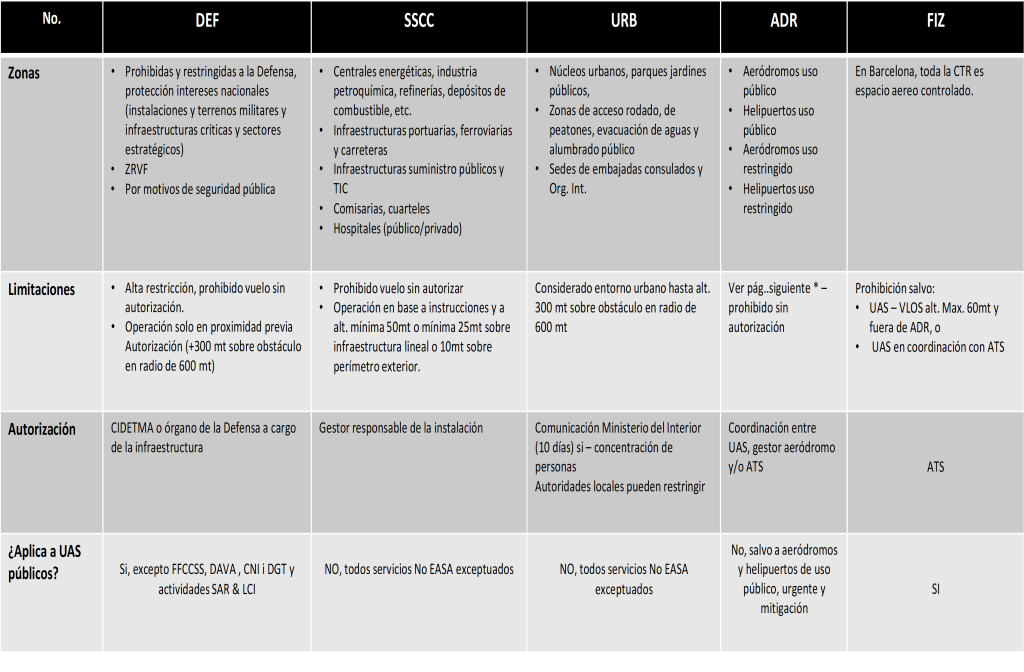
Regulation of drones in Europe
EASA European Union Aviation Safety Agency
What is the Agency? | EASA (europa.eu)
Main regulations in Europe.
REGULATION 2018/1139, this regulation talks about EU strategy and drone activities.
“Since unmanned aircraft also operate within the airspace alongside manned aircraft, this Regulation should cover unmanned aircraft, regardless of their operating mass. Technologies for unmanned aircraft now make possible a wide range of operations and those operations should be subject to rules that are proportionate to the risk of the particular operation or type of operations.”
REGULATION 2019/945, 12th March 2019 drone manufacturer regulation.
REGULATION 2019/947, 24th May 2019 drone operation regulation.
REGULATION 2021/664 regulatory framework for U-Space
https://www.droneuropa.com/U-Space/
CATEGORY OF OPERATIONS UNDER RISK CRITERIA, AMONG OTHERS.
Three categories:
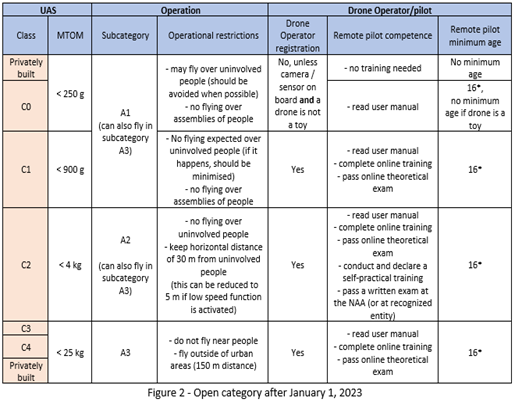
1.Open (figure 2):EU Regulation, Commission implementing regulation (EU) 2019/947 Art 3 and 4
- C0, C1, C2, C3 and C4 (subcategory A1, A2 and A3 (figure 1))
2.Specific:EU Regulation, Commission implementing regulation (EU) 2019/947 Art 3 and
- C5, C6 Standard scenarios (STS), urban areas and no Class
3.Certified:EU Regulation, Commission implementing regulation (EU) 2019/947 Art 3 and
- No Class
Open: low risk. Not subject to any prior authorization, subdivided in the groups of A1, A2 and A3.

Commission delegated regulation (EU) 2019/945 (Annex Part1)
Specific: High risk. Require operational authorization and issued by the competent authority. Commission implementing regulation (EU) 2019/947 (Art 5)
“Where one of the requirements laid down in Article 4 or in Part A of the Annex is not met, a UAS operator shall be required to obtain an operational authorisation pursuant to Article 12 from the competent authority in the Member State where it is registered.”
Certified: Maximum risk: platform and operator and pilot must be certified. Commission implementing regulation (EU) 2019/947 (Art 6)
“Operations shall be classified as UAS operations in the certified category only where the operation is conducted in any of the following conditions I over assemblies of people; I involves the transport of people; I involves the carriage of dangerous goods, that may result in high risk for third parties in case of accident”
New organization of the airspace that allows the flight of drones at low altitude and on a large scale. Initiatives UTM (USA) / U-space (EU): Very Low-level operations.
U-SPACE
U-SPACE:“Drafted by the SESAR Joint Undertaking, the U-space blueprint sets out the vision for the U-space, which aims to enable complex drone operations with a high degree of automation to happen in all types of operational environments, particularly in an urban context. When fully deployed, a wide range of drone missions that are currently being restricted will be possible thanks to a sustainable and robust European ecosystem that is globally interoperable.” SESAR 2021 Single European Sky Air Research.
New organization of the airspace that allows the flight of drones at low altitude and on a large scale. Initiatives UTM (USA) / U-space (EU): Very Low-level operations.
https://www.droneuropa.com/U-Space/

AIRSPACE STRUCTURE BY ICAO
- Class A: All operations must be conducted under IFR. All aircraft are subject to ATC clearance. All flights are separated from each other by ATC.
- Class B: Operations may be conducted under IFR, SVFR, or VFR. All aircraft are subject to ATC clearance. All flights are separated from each other by ATC.
- Class C: Operations may be conducted under IFR, SVFR, or VFR. All aircraft are subject to ATC clearance (country-specific variations notwithstanding). Aircraft operating under IFR and SVFR are separated from each other and from flights operating under VFR, but VFR flights are not separated from each other. Flights operating under VFR are given traffic information in respect of other VFR flights.
- Class D: Operations may be conducted under IFR, SVFR, or VFR. All flights are subject to ATC clearance (country-specific variations notwithstanding). Aircraft operating under IFR and SVFR are separated from each other and are given traffic information in respect of VFR flights. Flights operating under VFR are given traffic information in respect of all other flights.
- Class E: Operations may be conducted under IFR, SVFR, or VFR. Aircraft operating under IFR and SVFR are separated from each other and are subject to ATC clearance. Flights under VFR are not subject to ATC clearance. As far as is practical, traffic information is given to all flights in respect of VFR flights.
- Class F: Operations may be conducted under IFR or VFR. ATC separation will be provided, so far as practical, to aircraft operating under IFR. Traffic Information may be given as far as is practical in respect of other flights.
- Class G: Operations may be conducted under IFR or VFR. ATC has no authority, but VFR minimums are to be known by pilots. Traffic Information may be given as far as is practical in respect of other flights.
Air taxis are getting closer and closer.
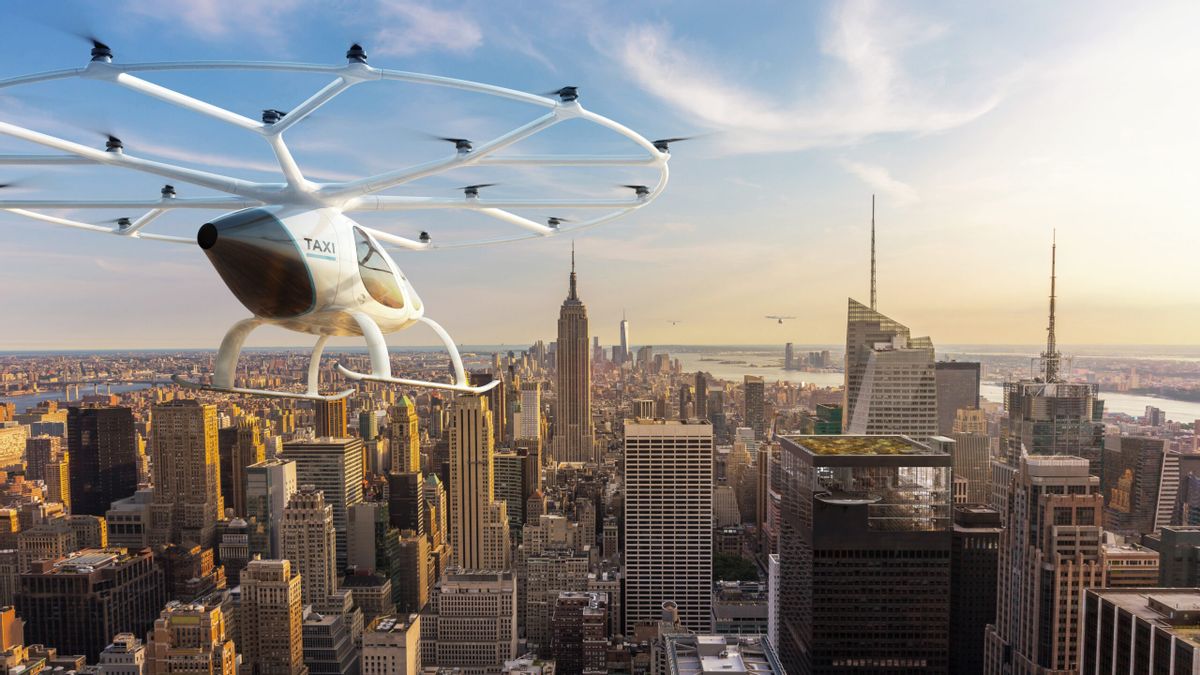
“Volocopter, a German company, last month made the first flight of its electric air taxi in France at a show at Le Bourget airport. They say the maiden flight aims to operate Olympic services in Paris by 2024.”
https://voi.id/en/technology/69622/paris-olympics-2024-preparation-volocopter-tests-air-taxi
INCIDENTS WITH DRONES ARE INCREASING.
Drone incidents are increasing year after year, and
the concern for deterrence measures is growing. One of our professors Eduard Angelats has provided us with an interesting article from the University of Athens on this matter.
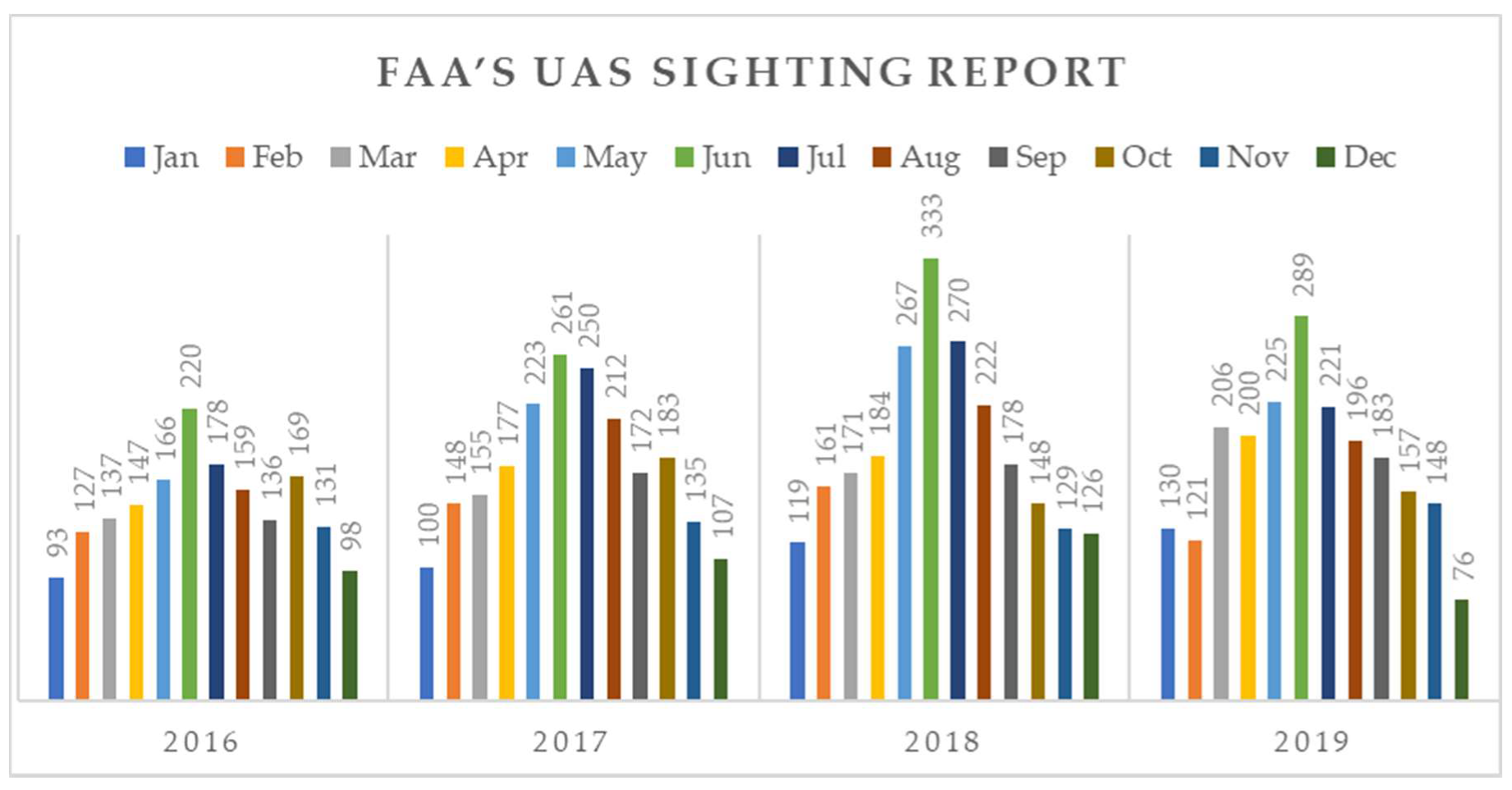
Defending Airports from UAS:A Survey on Cyber-Attacks and Counter-Drone Sensing Technologies
Georgia Lykou, Dimitrios Moustakas and Dimitris Gritzalis